For instance, as covered in the Socioeconomics video about Fibonacci patterns observed in nature, we find that math is indeed very involved in structures we initially find more aesthetically than mathematically pleasing, such as ferns and plants.
We can also observe hyperbolic space, another mathematical concept, in flat sea worms and even crochets.


Using crochets to represent hyperbolic space
In addition, we learned that the Golden Ratio, a mathematical concept, is also used to create and evaluate art, architecture, and even aspcects of the human body extensively (Vesna 2012).
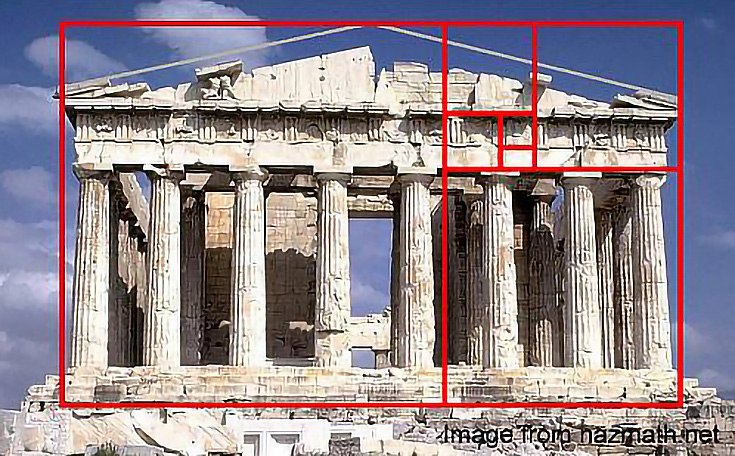
The Parthenon in Athens, Greece

Leonardo Da Vinci's "The Mona Lisa"
We also learn that in the early to mid-20th century, artists like Frantisek Kupka and Max Weber sought to escape reality and the status quo by tapping into the notion of the fourth dimension, a concept widely regarded as mathematical in nature, with huge implications for scientific fields like physics (Henderson 1984).

As for robotics and art, we learned that the utilization of creation of one of those fields can bring about an application for the other. This can be seen in the invention of the robotic arm, originally created for the progression in the field of robotics, used for art; for example, a company called Mataerial uses this technology to create "anti-gravity" sculptures.


Max Weber's "Interior of the Fourth Dimension"

The artists behind this company, Petr Novikov and Sasa Jokic, aimed to use this technology, the production/mass-production of which was made possible by the advent of industrialization, to create art that appeared to defy gravity, thus making strides in the artistic as well as scientific spheres.

We also learned about how after the advent of industrialization, artwork can be easily reproduced and manipulated to the extent that it can lose its "aura" of originality, posing a problem for determining the originality of an artistic piece (Benjamin 1936).
This problem still exists (and may have even been amplified) as we entered the era of digital technology. Digital equipment and interfaces like computers and software editing programs now allow us to manipulate original artwork like music so much that it can become difficult to recognize the original art source.
A somewhat obscure yet telling example of this phenomenon can be found when the musician group Justice had their song "D.A.N.C.E." sampled by Jay-Z for his track "On To The Next One", which was not apparent until Justice made it so in their set at the 2012 Day of the Dead music festival.
(Skip to 6:35 to see what I mean.)
Sources and links:
1)Fibonacci, Fractals, and Financial Markets: http://youtu.be/RE2Lu65XxTU
2)Daina Taimina's hyperbolic crochets: http://crochetcoralreef.org/contributors/daina_taimina.php
3)Professor Vesna's Math + Art Lecture: http://www.youtube.com/watch?v=mMmq5B1LKDg
4)Linda D. Henderson's The Fourth Dimension and Non-Euclidean Geometry in Modern Art: Conclusion: http://links.jstor.org/sici?sici=0024-094X%281984%2917%3A3%3C205%3ATFDANG%3E2.0.CO%3B2-1
5)Max Weber's interpretations of the fourth dimension: http://acunix.wheatonma.edu/jsklensk/Art_Spring09/inclass/fourth%20dimension/weber.html
6)Mataerial: http://www.mataerial.com/
7)Walter Benjamin's The Work of Art in the Age of Mechanical Reproduction: https://instructure-uploads.s3.amazonaws.com/account_30000000000529/attachments/1377885/BenjRepro.pdf?AWSAccessKeyId=AKIAJBQ7MOX3B5WFZGBA&Expires=1373863803&Signature=xR1e4DeFF5003sHzv0636pujdKE%3D&response-content-disposition=attachment%3B%20filename%3D%22BenjRepro.pdf%22%3B%20filename%2A%3DUTF-8%27%27BenjRepro.pdf
8)Justice's full set at 2012 Day of the Dead music festival: http://youtu.be/hkiGmTzmBO0
9)How Jay-Z came to sample Justice for his track "On To The Next One": http://www.complex.com/music/2011/08/swizz-beatz-tells-all-the-stories-behind-his-classic-records-part-1/on-to-the-next-one
Works Cited
Socionomics. "Fibonacci, Fractals, and Financial Markets." http://youtu.be/RE2Lu65XxTU. Youtube. July 3, 3013.
Taimina, Daina. "Discoverer of Hyperbolic Crochet." http://crochetcoralreef.org/contributors/daina_taimina.php. Hyperbolic Crochet Coral Reef. July 5, 2013.
Vesna, Victoria. "Mathematics | Perspective; Time | Space." https://cole2.uconline.edu/courses/32590/wiki/week-2-view?module_item_id=355653. University of Cailfornia Online. June 3, 2013.
Henderson, Linda D. "The Fourth Dimension and Non-Euclidean Geometry in Modern Art: Conclusion."Leonardo, Vol. 17, No. 3. (1984), pp. 205-210.
Sklensky, Janice. "Max Weber." http://acunix.wheatonma.edu/jsklensk/Art_Spring09/inclass/fourth%20dimension/weber.html. July 6, 2013.
"Mataerial." http://www.mataerial.com/. July 7, 2013.
Benjamin, Walter. "The Work of Art in the Age of Mechanical Reproduction." https://instructure-uploads.s3.amazonaws.com/account_30000000000529/attachments/1377885/BenjRepro.pdf?AWSAccessKeyId=AKIAJBQ7MOX3B5WFZGBA&Expires=1373865242&Signature=L5so4%2F9m1x%2B71OjQET6mpfz1b%2Fo%3D&response-content-disposition=attachment%3B%20filename%3D%22BenjRepro.pdf%22%3B%20filename%2A%3DUTF-8%27%27BenjRepro.pdf. University of California Online. June 4, 2013.
LBarron714. "JUSTICE @ Hard: Day of the Dead HD (Part 2/3)." http://youtu.be/hkiGmTzmBO0. Youtube. July 6, 2013.
Insanul, Ahmed. "Swiss Beatz Tells All: The Stories Behind His Classic Records (Part 1)." http://www.complex.com/music/2011/08/swizz-beatz-tells-all-the-stories-behind-his-classic-records-part-1/on-to-the-next-one. Complex Music. July 6, 2013.


